Badminton Tutorial Program · Advanced
The Backhand & Round-the-Head
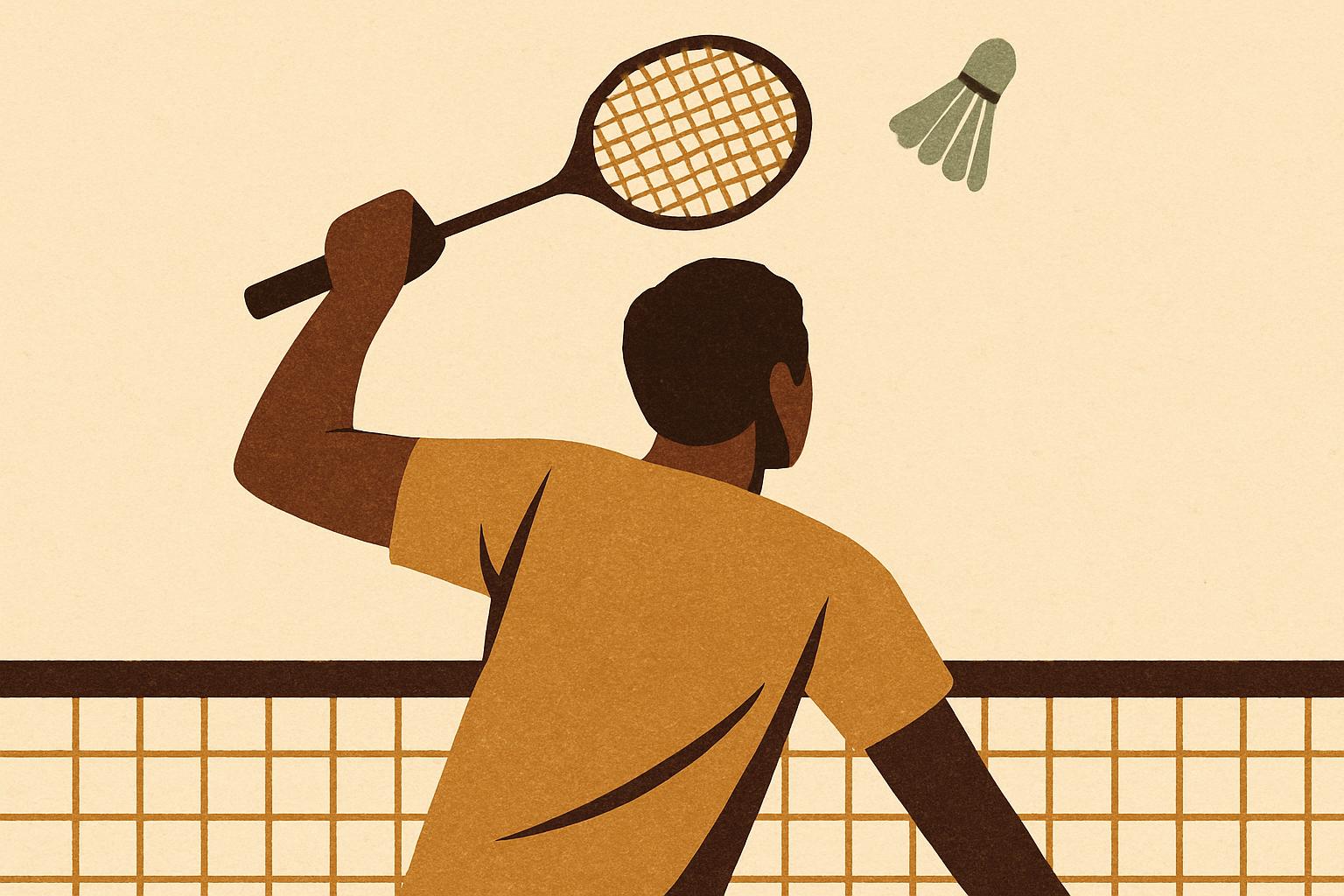
Every club player fears the deep backhand corner — and every advanced player has TWO answers to it: a genuinely functional backhand overhead, and the footwork to take the same shuttle with a round-the-head FOREHAND instead. This lesson builds both, in that order of priority reversed: footwork first, backhand second.
One thing to master: the round-the-head forehand. The best backhand at club level is the one you didn't have to hit.
What you'll learn
- Round-the-head footwork: taking the backhand corner with your forehand
- The backhand overhead: thumb grip, elbow lift, and timing over strength
- Realistic backhand choices: clear when you can, drop when you can't
- Defending the corner: not getting sent there in the first place
The technique
Round-the-head first
From your split-step, chasse toward the backhand rear corner but arch and rotate so your FOREHAND takes the shuttle above your non-racket shoulder. You keep all your overhead options (clear, drop, smash) and all your deception. The cost is court position — recover with two urgent chasses toward base.
The backhand overhead
When the shuttle is truly behind you: turn your back to the net, step your racket foot toward the corner, elbow UP and pointing at the shuttle, then extend and flick with thumb-grip forearm rotation. Contact at the highest point beside your body. Timing produces the power here — muscling it produces nothing.
Choose the honest shot
A full backhand clear to the baseline is elite-level rare. The honest advanced choices: a backhand DROP to either front corner (needs only touch, not power) or a backhand clear to three-quarter court AIMED AT A CORNER rather than gifted to centre. Play the shot you actually own.
Avoid the corner strategically
The deep backhand is a destination opponents choose for you. Deny it: hold a base slightly biased toward your backhand side, take shuttles early with round-the-head before they're deep, and lift/clear cross-court less predictably so they can't groove the attack to that corner.
Drills to practice
- Round-the-head multi-shuttle: 15 feeds to the backhand rear corner, ALL taken with round-the-head forehand, recovering to base each time
- Backhand drop reps: 20 backhand drops from the corner to alternating front corners — power banned, placement scored
- Corner escape games: rallies start with a feed to your deep backhand; you win the point only if your escape shot wasn't killed
Common mistakes
- Defaulting to a weak backhand when round-the-head footwork could have taken a forehand
- Elbow low on the backhand (the shot dies at the net) — the elbow points at the shuttle first
- Attempting the heroic backhand clear you don't own instead of the drop you do
References
- BWF Shuttle Time — official BWF teaching programme (technique modules) — shuttletime.bwfbadminton.com/
Rule statements in this lesson were validated against the BWF Laws of Badminton (Statutes Section 4.1, current edition) and BWF announcements. Technique and drill guidance follows the BWF Shuttle Time framework and widely taught club coaching practice.