Badminton Tutorial Program · Advanced
Singles Strategy
Singles is badminton distilled: one player, the full court, no one to blame. Rallies are longer, the flat game matters less, and fitness is a weapon — but the deciding skill is geometry: who makes whom run further, corner after corner, until position or patience breaks.
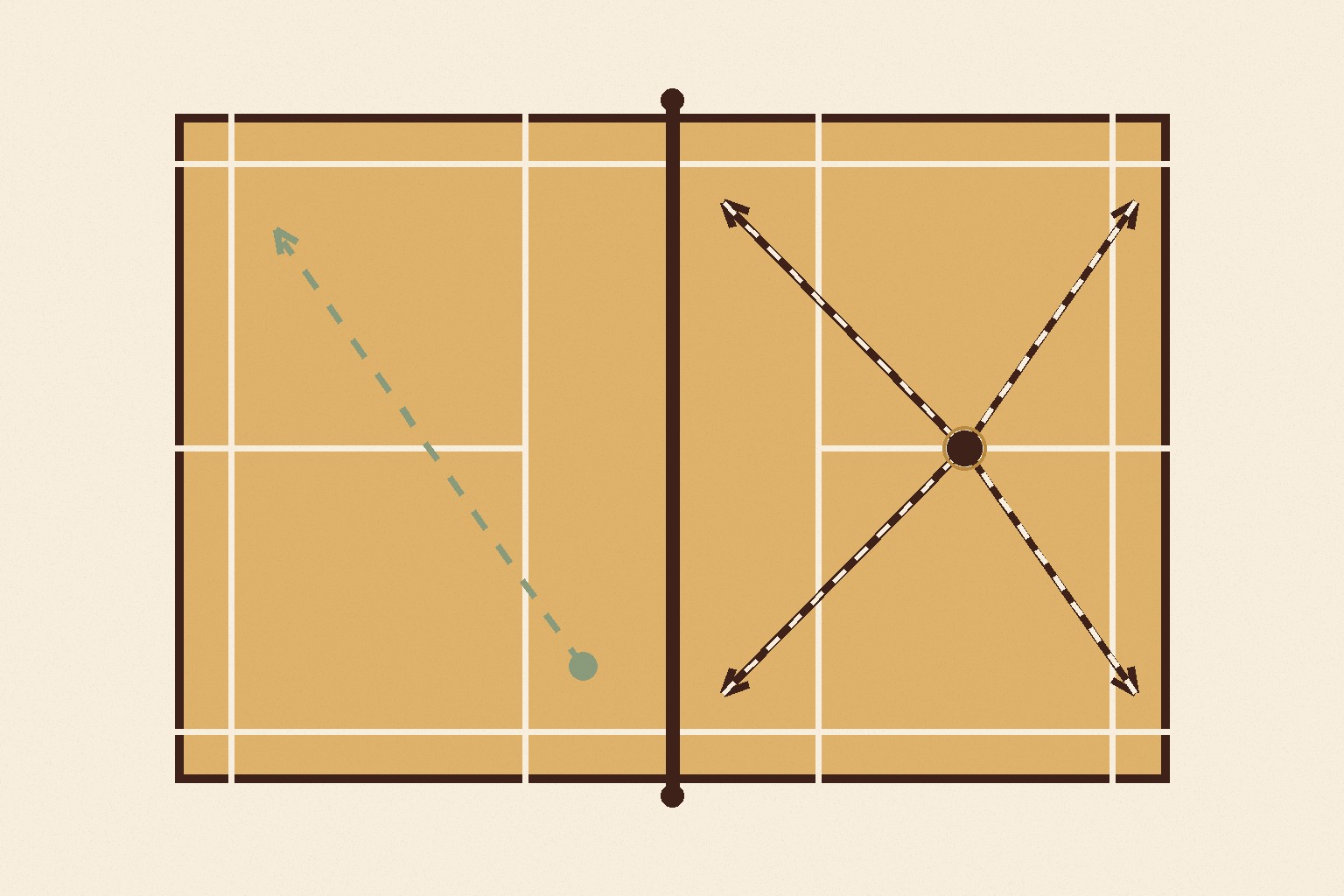
One thing to master: hit to the corner FURTHEST from where they are, then recover before they hit. Singles is movement debt — make them borrow more than you.
What you'll learn
- The singles base and how it differs from doubles positioning
- The four-corner game: building rallies that compound movement
- Serve strategy: high serves, and when to vary
- Match management: pace, patience, and playing the score
The technique
Own your base
Singles base is centre-court, a shade behind the middle — adjusted by recovery bias (Lesson 14). Your first weapon is simply recovering to it faster than your opponent recovers to theirs; every exchange where you're set and they're moving is a point being built.
The four-corner game
Move your opponent through the LONGEST diagonals: deep clear to their backhand corner, then a drop to the opposite front corner, and punish the short lift. Never hit the same corner twice unless it's behind them (wrong-footing: hitting where they just LEFT is the cruellest shot in singles). The rally is a compounding loan of movement — collect when their reply floats.
Serving in singles
The high serve to the back line is your staple: it starts the rally neutral and asks a fitness question. Mix low serves when they camp deep, and vary placement between the T and the wide corner so the return can't be grooved. After every serve: base, split-step.
Play the score
At 11 and between games, intervals are tactical resets — decide ONE adjustment, not five. Leading, keep rallies long and boring: the pressure of chasing does your work. Trailing, change SOMETHING structural (serve height, rally pace, attack corner) rather than just trying harder at the same losing pattern.
Drills to practice
- Half-court singles (long and narrow): forces the clear-drop vertical game and punishes short length
- Corner-call rallies: coach calls your target corner mid-rally; you must obey while your opponent plays free — survival trains geometry under pressure
- Two-corner attack game: you may only hit to the two corners diagonal from your opponent's position; first to 11
Common mistakes
- Admiring shots instead of recovering (singles punishes it within one stroke)
- Playing pretty variety with no plan — corners without compounding is just exercise
- Chasing quick winners when trailing instead of restructuring the rally
References
- BWF Statutes, Section 4.1 — Laws of Badminton, Law 7 (Scoring — intervals and games) as the frame for match management — system.bwfbadminton.com/documents/folder_1_81/Statutes/CHAPT
- BWF Shuttle Time — official BWF teaching programme (technique modules) — shuttletime.bwfbadminton.com/
Rule statements in this lesson were validated against the BWF Laws of Badminton (Statutes Section 4.1, current edition) and BWF announcements. Technique and drill guidance follows the BWF Shuttle Time framework and widely taught club coaching practice.