Badminton Tutorial Program · Advanced
Deception & Holds
At advanced level everyone can hit every shot — so rallies are won by making opponents prepare for the WRONG one. Deception in badminton is not flashiness; it's economy: identical preparations, delayed commitment, and small racket-face changes at the last instant. It is learnable, and it compounds every other lesson in this program.
One thing to master: the HOLD. Take the shuttle a beat later than expected, from unchanged preparation — the pause alone wrong-foots more opponents than any trick shot.
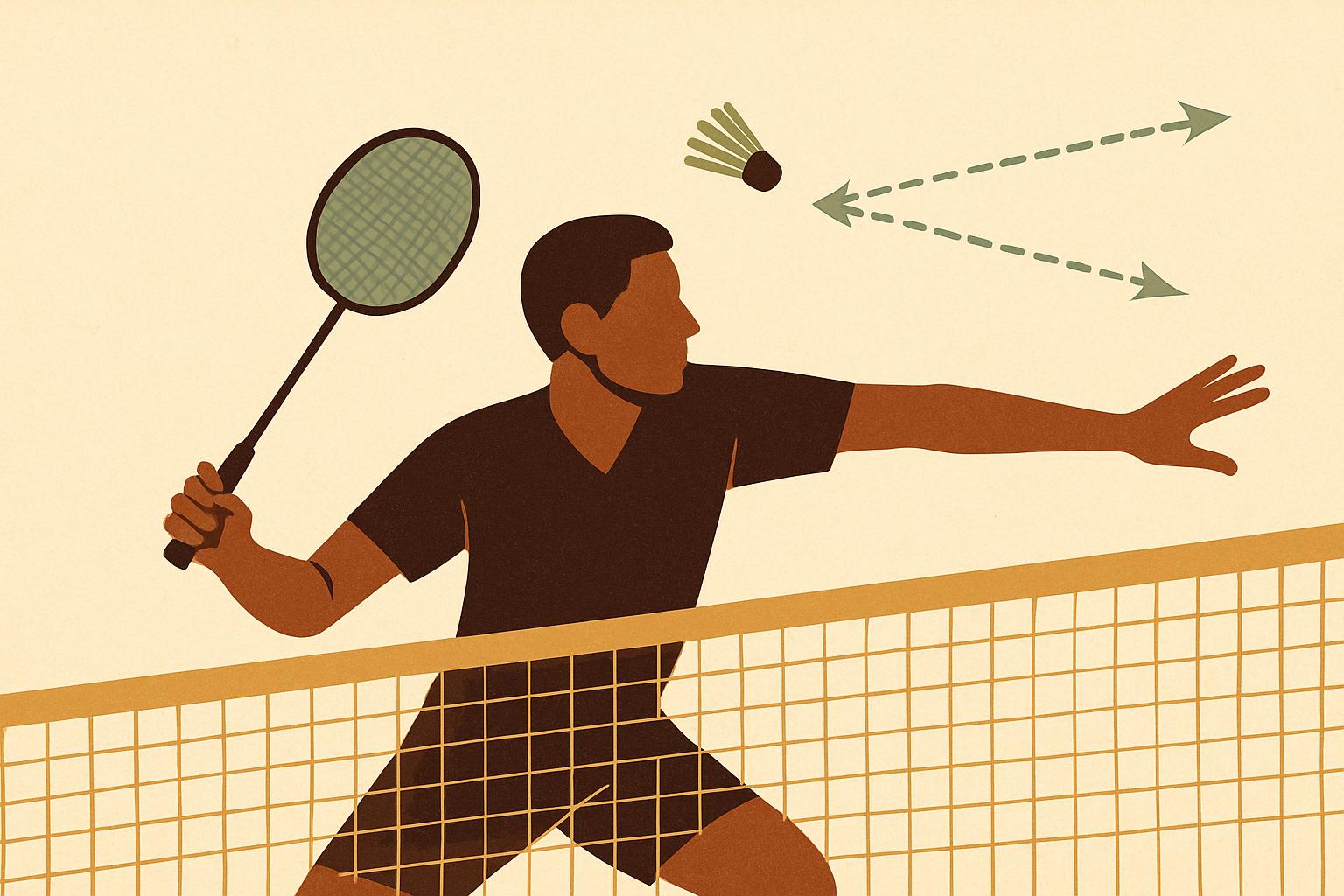
What you'll learn
- The universal principle: one preparation, many shots
- The hold: delaying contact to break their rhythm
- Sliced and reverse-sliced drops: fast swing, slow shuttle
- Double motion at the net — showing one direction, playing the other
The technique
One preparation
Audit yourself (or better, get filmed): does your clear, drop, and smash preparation look identical until contact? Every leak — a lower elbow on drops, a slower approach on clears — is a free early warning to a good opponent. Deception starts with sameness, not with trickery.
The hold
Arrive early (footwork again), racket prepared — then WAIT half a beat before striking. Your opponent, reading normal timing, commits their split-step and weight; your delayed shot goes where they no longer are. The hold works from the net, the midcourt, and the rear court, and it costs you nothing but earlier arrival.
The sliced drop
Swing at CLEAR speed but brush across the shuttle at contact — the racket face cuts sideways, the shuttle leaves slow and angled while your swing screamed 'deep'. The reverse slice (cutting outward) sends it the other diagonal. These are the highest-value 'trick' shots in badminton because the disguise is the full swing itself.
Double motion
At the net: show a net shot toward one corner, let their weight shift, then roll the racket face and play the other line — one smooth change, not a theatrical stutter (a genuine second backswing is a fault risk and slower anyway). Use sparingly; twice a game keeps every net exchange honest.
Drills to practice
- Preparation audit: partner watches 20 mixed overheads and calls the shot as early as possible — reduce their success rate week over week
- Hold rallies at the net: every net shot must be taken with a visible pause before contact
- Slice targets: 10 sliced drops each diagonal, fed from lifts, landing inside the front service line
Common mistakes
- Learning trick shots before your basic shots share one preparation (deception with a leaky base fools nobody)
- Overusing the double motion until it's your pattern, not your surprise
- Holding the shuttle so long you fault or lose your own hitting window
References
- BWF Shuttle Time — official BWF teaching programme (technique modules) — shuttletime.bwfbadminton.com/
Rule statements in this lesson were validated against the BWF Laws of Badminton (Statutes Section 4.1, current edition) and BWF announcements. Technique and drill guidance follows the BWF Shuttle Time framework and widely taught club coaching practice.