Badminton Tutorial Program · Basic
Grips & Ready Position
Badminton is played with two grips and one habit: a relaxed hand that flows between them mid-rally. The 'panhandle' death-grip that feels natural on day one is the single biggest thing that stalls new players — fix your grip this week and every stroke in this program becomes learnable.
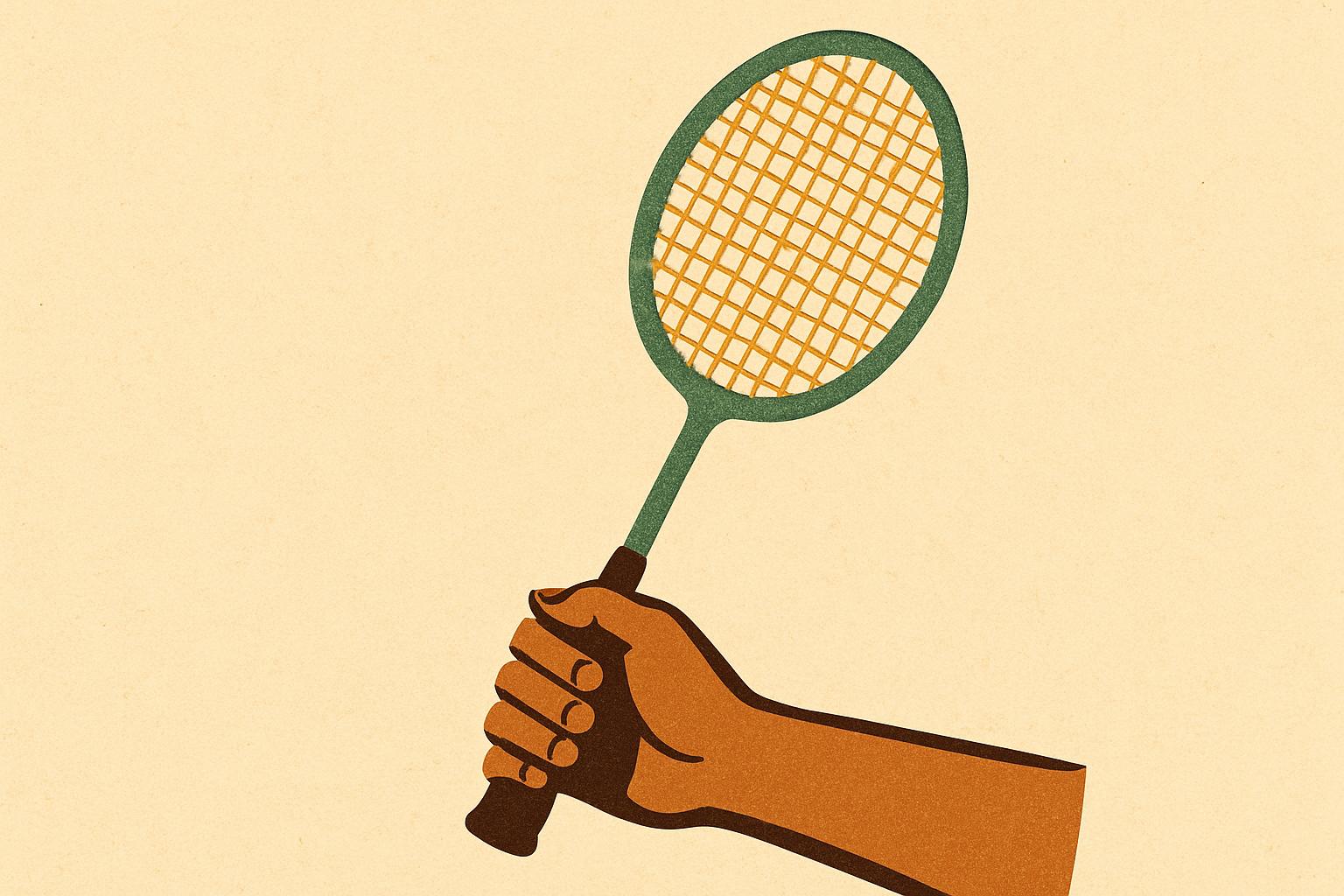
One thing to master: hold the racket like a handshake, loose enough that a friend could pull it from your hand. Power comes from a relaxed grip that tightens ONLY at contact.
What you'll learn
- The forehand (handshake) grip — the V on the top bevel
- The thumb (backhand) grip for shots on your non-racket side
- Grip pressure: loose between shots, firm only at impact
- The ready position between rallies' shots
The technique
The forehand grip
Hold the racket by the shaft with your off hand, strings perpendicular to the floor. Shake hands with the handle: the V of thumb and index finger sits on the narrow top bevel, fingers slightly spread with the index a touch higher. You should be able to see your knuckles side-on, not behind the strings.
The thumb grip
For backhand shots, rotate the racket slightly and press the flat of your THUMB against the wide back bevel. The thumb is the engine of every backhand — drives, serves, and lifts all push from it.
Pressure and switching
Hold at 3-out-of-10 between shots. The switch between forehand and thumb grip is a small finger roll, not a re-grab — practise it until it happens without looking. Tight hands can't switch, which is why relaxation IS technique.
Ready position
Feet just wider than shoulders, knees soft, weight forward on the balls of your feet. Racket UP in front of your chest — in badminton the shuttle can be on you in a quarter of a second, and a dropped racket is a lost rally.
Drills to practice
- Grip switches: 50 forehand↔thumb rolls while watching TV — no looking at your hand
- Shadow strokes: 20 forehand and 20 backhand swings, checking the V or thumb placement before each
- Wall rally softly with deliberate grip switching as the shuttle alternates sides
Common mistakes
- The panhandle grip (palm flat behind the strings) — feels strong for one shot, caps your ceiling forever
- Squeezing hard all rally — slow hands, no deception, tired forearm
- Waiting with the racket at your knees
References
- BWF Shuttle Time — official BWF teaching programme (technique modules) — shuttletime.bwfbadminton.com/
Rule statements in this lesson were validated against the BWF Laws of Badminton (Statutes Section 4.1, current edition) and BWF announcements. Technique and drill guidance follows the BWF Shuttle Time framework and widely taught club coaching practice.