Pickleball Tutorial Program · Advanced
Dinking — the Soft Game
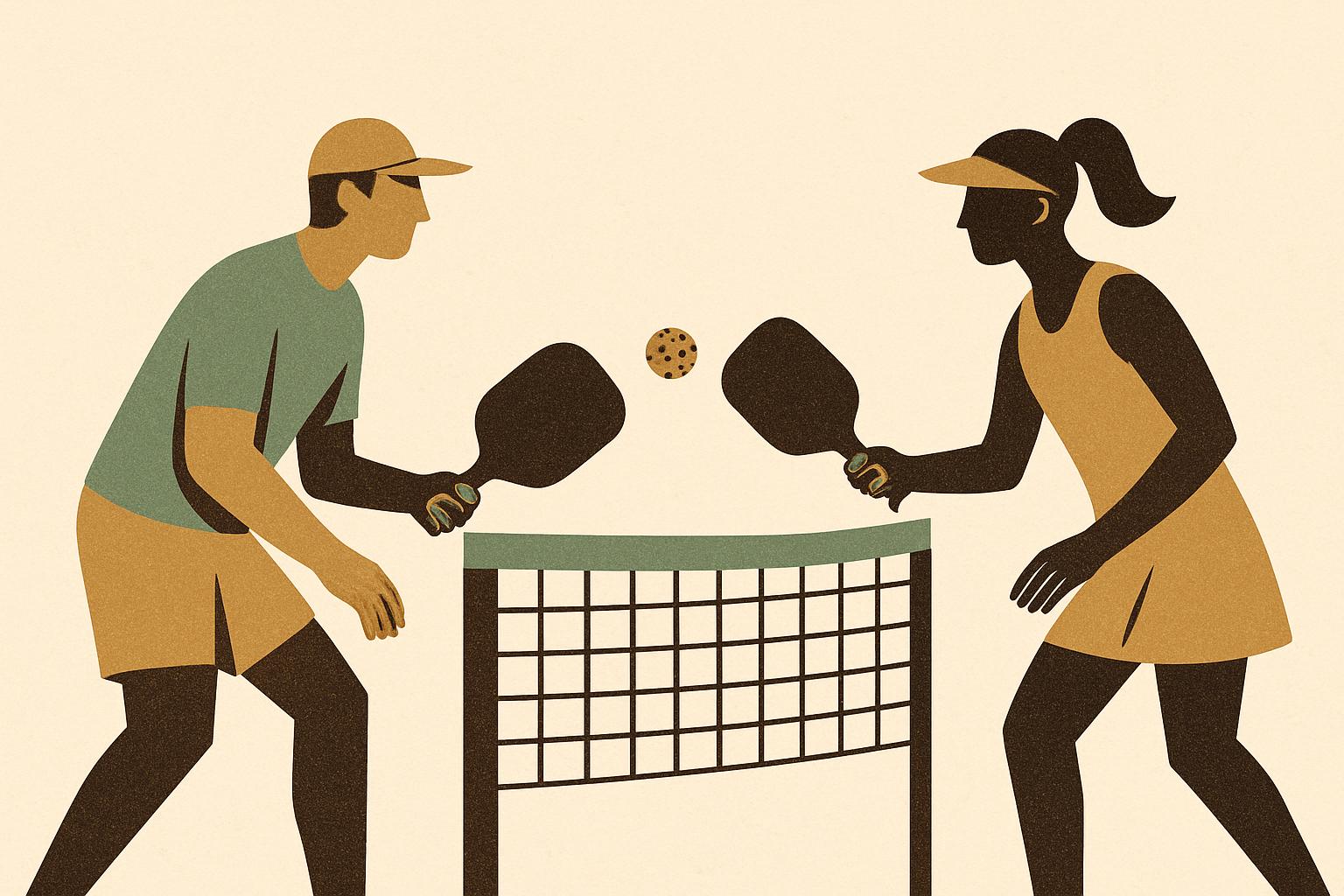
When both teams reach the kitchen line, power stops working — every hard shot gets blocked back faster. This is where the dink takes over: a soft shot that arcs just over the net and lands in the opponent's kitchen, unattackable. The team that dinks with more patience forces the other into the mistake.
One thing to master: dinks that peak on YOUR side of the net. The height of the arc is the only thing to think about.
What you'll learn
- What makes a ball 'unattackable'
- Dink technique: legs and shoulder, not wrist
- Cross-court versus straight dinks
- Recognising — and punishing — a dink that sits up
The technique
The shape of a dink
Contact out in front, paddle face slightly open, a gentle lift from the shoulder at 3/10 grip pressure. The ball should peak on YOUR side and descend into their kitchen. If it peaks on their side, it's attackable.
Use your legs
Bend at the knees, not the waist. A low balanced base absorbs pace and keeps the paddle face steady. Tired legs — not bad hands — cause most dink errors.
Favor the cross-court
The net is lowest in the middle and the diagonal gives more court. Cross-court dinks to the backhand are the bread and butter of advanced play; straight dinks are the surprise, not the default.
Attack only what sits up
If their dink bounces high enough to contact above net height — speed up. Until then, keep dinking. Advanced pickleball is won by the team that refuses to attack the wrong ball.
Drills to practice
- Kitchen-only games to 7: dinks only, point ends on any ball bouncing outside the kitchen
- Target dinking: paddle flat in their kitchen; first to hit it 3 times
- Patience ladder: rallies must reach 10 dinks before either side may speed up
Common mistakes
- Flicking with the wrist instead of lifting with the shoulder
- Standing tall and reaching down — bend the knees
- Attacking a ball below net height because patience ran out
References
- USA Pickleball — 2026 Official Rulebook, Section 9 (Non-Volley-Zone Rules — why a ball landing in the kitchen is unattackable out of the air) — usapickleball.org/docs/rules/USAP-Official-Rulebook.pdf
Rule statements in this lesson were validated against the 2026 USA Pickleball Official Rulebook (effective January 1, 2026). Technique and drill guidance reflects widely taught coaching practice for recreational play.