Pickleball Tutorial Program · Basic
The Return of Serve
Here is the open secret of pickleball: the team at the non-volley line wins most points. The return of serve is your ticket there — unlike the serving team, you may move up immediately. A deep return followed by a purposeful run is the single highest-value habit in the sport.
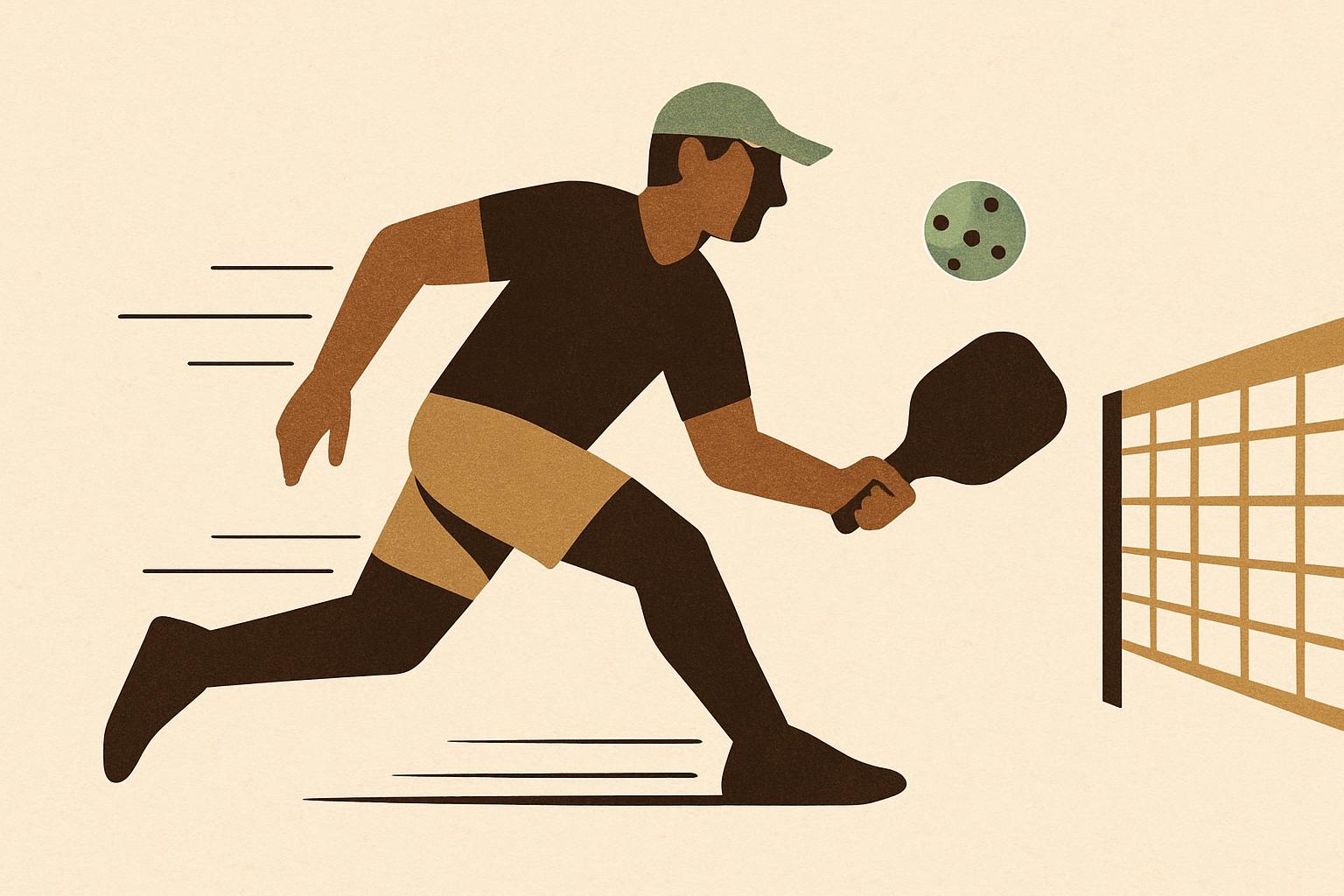
One thing to master: return deep, then RUN to the kitchen line. One shot, one run — that's the whole lesson.
What you'll learn
- Why the returning team has the positional advantage
- A compact return that prioritises depth
- The 'return and run' pattern
The technique
Set up expecting depth
Stand a step behind the baseline. It's far easier to move forward into a short serve than to back up on a deep one.
Keep the return simple
A long smooth stroke with high, safe net clearance. You're not trying to win the point — you're buying the six steps to the kitchen. Aim deep-middle or at the weaker opponent.
Run with the shot
The moment the ball leaves your paddle, move. Follow your return's flight toward the line.
Arrive balanced
If you can't reach the line before their contact, stop in a balanced stance anyway — being steady beats being fast. Take the remaining ground on the next shot.
Drills to practice
- Return-and-run reps: partner serves, you return deep and touch the kitchen line before the ball bounces on the far side
- Depth ladder: returns past midline = 1 point, back third = 3; play to 21
- Ten returns in a row aimed at a backhand-corner target
Common mistakes
- Admiring a good return from the baseline
- Hitting the return so hard it comes back before you arrive
- Getting caught mid-stride at their contact instead of stopping balanced
References
- USA Pickleball — 2026 Official Rulebook, Section 7 (Fault Rules — the two-bounce rule that shapes return play) — usapickleball.org/docs/rules/USAP-Official-Rulebook.pdf
Rule statements in this lesson were validated against the 2026 USA Pickleball Official Rulebook (effective January 1, 2026). Technique and drill guidance reflects widely taught coaching practice for recreational play.