Pickleball Tutorial Program · Basic
Footwork & the Split-Step
Ask a coach what separates smooth players from scrambling ones and the answer is footwork, not hands. Pickleball movement is short and lateral: small adjusting steps, a wide base, and one magic habit — the split-step — that keeps you balanced for whatever comes.
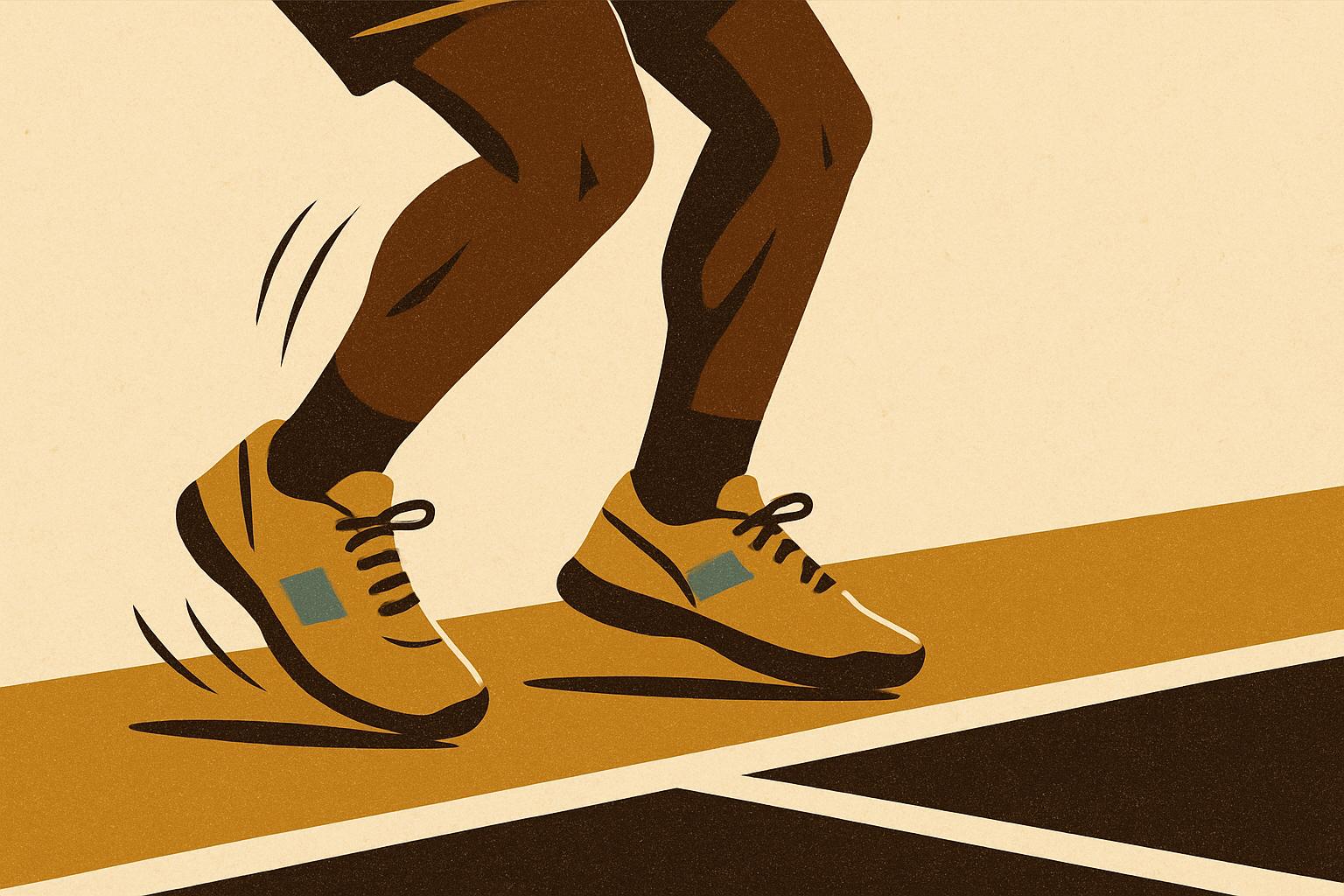
One thing to master: the split-step — a small hop onto both feet every time your opponent starts their swing.
What you'll learn
- The split-step and its timing
- Lateral shuffles vs crossover steps
- Why you never backpedal (and what to do instead)
The technique
The split-step
As your opponent begins their forward swing, take a small hop and land on both feet, shoulder-width, knees bent. You land as the ball leaves their paddle — balanced and able to push off in any direction. Do it before EVERY opposing shot, everywhere on court.
Shuffle, don't cross
For balls within a step or two, shuffle sideways keeping your chest to the net. Save crossover running for genuinely wide balls.
Small steps beat big ones
Take several small adjusting steps to arrive at the perfect distance from the ball, not one giant lunge. Lunges end points; adjustments continue them.
Never backpedal
Backpedaling under a lob is the most common way players get hurt. Turn, drop-step, and run back facing sideways — Lesson 14 covers lob coverage fully.
Drills to practice
- Shadow split-steps: partner claps at random moments — hop into a balanced split-step on each clap
- Line shuffles: shuffle side-to-side along the kitchen line for 30 seconds, paddle up, chest to the net
- Cone adjustments: place a ball on a cone, approach with 4+ small steps, simulate a stroke, retreat, repeat
Common mistakes
- Standing flat-footed while your opponent swings
- Running through your shot instead of setting your feet
- Backpedaling for overheads instead of turning
References
- USA Pickleball — Official Rules hub (updated annually) — usapickleball.org/rules/
Rule statements in this lesson were validated against the 2026 USA Pickleball Official Rulebook (effective January 1, 2026). Technique and drill guidance reflects widely taught coaching practice for recreational play.