Pickleball Tutorial Program · Basic
Grip & Ready Position
Every shot in pickleball — serve, dink, volley, drop — flows from the same grip and the same ready position. Get these two right in your first week and everything else becomes easier. Get them wrong and you will fight your own hands for months.
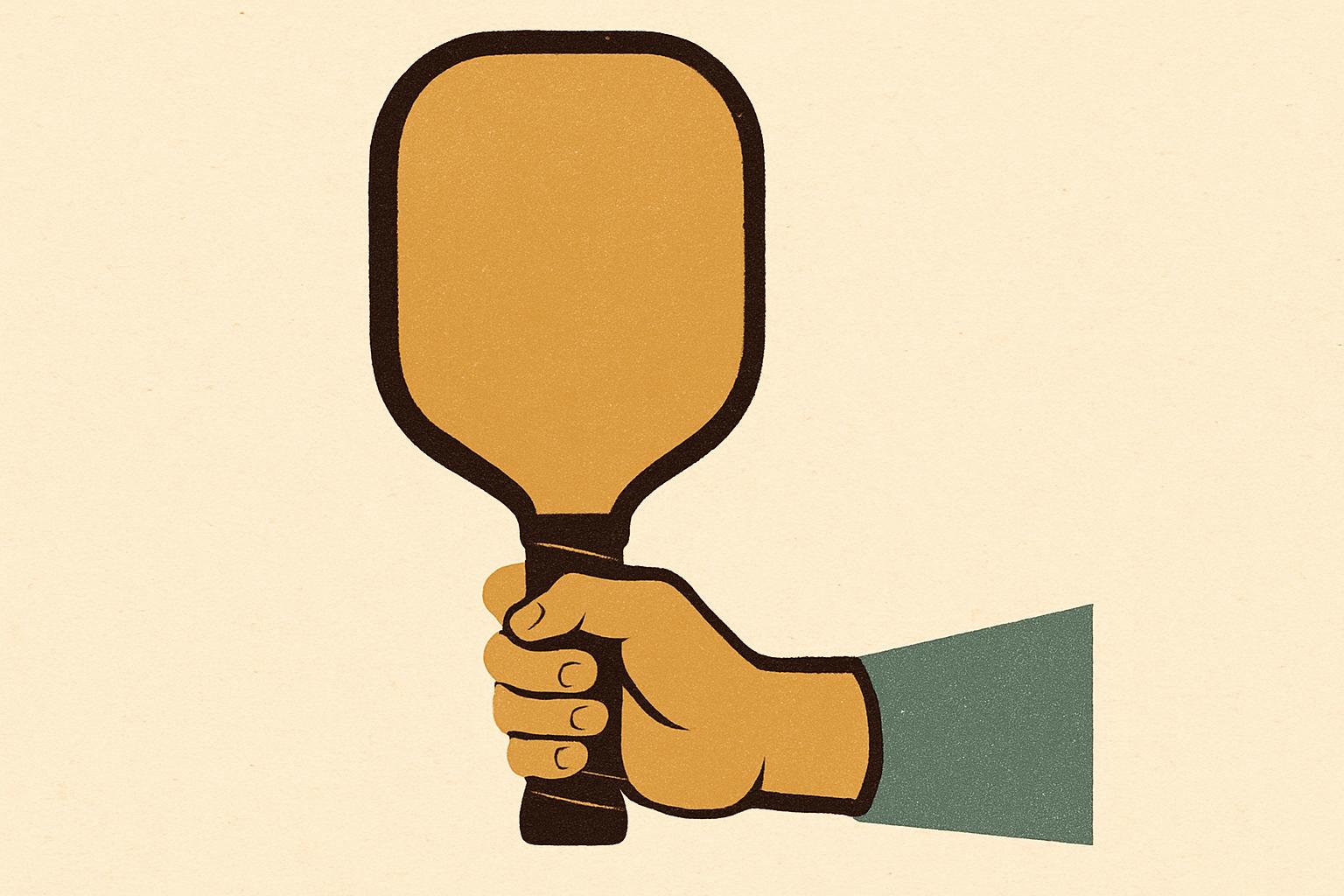
One thing to master: the handshake grip with the paddle held up at chest height. If you only fix this, every later lesson gets easier.
What you'll learn
- The continental ('handshake') grip for both forehand and backhand
- Grip pressure: the 3-out-of-10 rule
- The ready position: paddle up, elbows in front, knees soft
The technique
Find the continental grip
Hold the paddle by the throat with your off hand, edge facing the sky. Shake hands with the handle — the V between thumb and index finger sits on the top edge. Now you can hit forehands and backhands without changing grips, essential at the net where there's no time to switch.
Set your pressure
Squeeze at about 3 out of 10 — firm enough that the paddle doesn't twist, loose enough that your wrist stays soft. Soft hands absorb pace; tight hands pop the ball up.
Build the ready position
Feet shoulder-width, weight on the balls of your feet, knees bent. Paddle up at chest height in front of your body. From here you can block a fast volley or drop into a dink without a backswing.
Reset after every shot
The paddle drifts down as players tire. Make 'paddle back up' your default between every shot — net points are won by whoever is ready first.
Drills to practice
- Self-rally: 50 paddle bounces forehand-side, 50 backhand-side, without regripping
- Wall taps: volley softly against a wall from 10 feet, focusing only on keeping the paddle at chest height
- Partner check: partner calls 'grip!' randomly mid-rally — freeze and check your V
Common mistakes
- The frying-pan grip (palm behind the face) — feels powerful, volleys terribly
- Death-gripping at 8/10, which sends every soft shot too high
- Letting the paddle hang at your waist between shots
References
- USA Pickleball — 2026 Official Rulebook, Section 2 (Equipment specifications) — usapickleball.org/docs/rules/USAP-Official-Rulebook.pdf
Rule statements in this lesson were validated against the 2026 USA Pickleball Official Rulebook (effective January 1, 2026). Technique and drill guidance reflects widely taught coaching practice for recreational play.