Pickleball Tutorial Program · Basic
Groundstrokes: Forehand & Backhand
Between the baseline and the kitchen you'll hit groundstrokes — forehands and backhands off the bounce. Pickleball groundstrokes are more compact than tennis strokes: the court is short, so control and placement beat raw power every time.
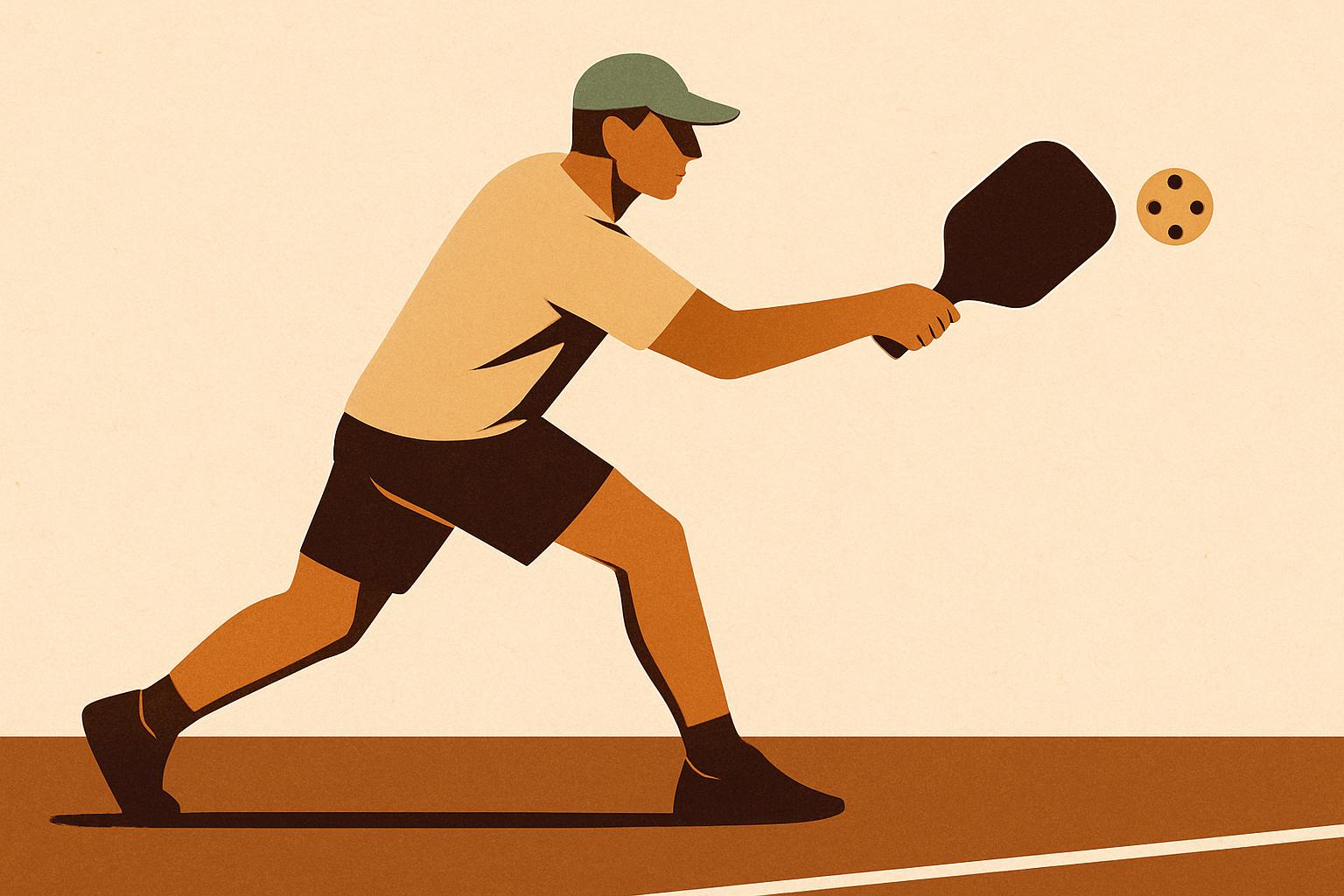
One thing to master: contact out in FRONT of your body. Front contact fixes more groundstroke problems than any other cue.
What you'll learn
- Compact low-to-high swing shape for forehand and backhand
- Contact point: out in front, around knee-to-waist height
- Depth targets and when to just get it back
The technique
The forehand
Turn your shoulders sideways as the ball approaches, small backswing to hip height, swing low-to-high and meet the ball in FRONT of your lead hip. Finish with the paddle over your opposite shoulder — abbreviated, not a tennis loop.
The backhand
Same continental grip, shoulders turn the other way, lead with the paddle's bottom edge slightly first and brush up through contact. Two hands on the paddle is perfectly fine while learning.
Height and depth
Aim two to three feet over the net toward the back third. In rallies where you're pinned deep, a high deep ball is a great answer — it resets the point.
Move, then swing
Get your feet to the ball first, set, then swing. A compact swing off balanced feet beats a beautiful swing off stretched ones.
Drills to practice
- Cooperative baseline rally: 20 forehands cross-court, then 20 backhands
- Depth game: any ball landing in the back third scores; first to 11
- Alternating feed: partner feeds one forehand, one backhand — 10 rounds without an error
Common mistakes
- Letting the ball get behind you (late contact = balls sail long)
- Full tennis backswings — there's no time and no need
- Trying to hit winners from the baseline instead of building the point
References
- USA Pickleball — Official Rules hub (updated annually) — usapickleball.org/rules/
Rule statements in this lesson were validated against the 2026 USA Pickleball Official Rulebook (effective January 1, 2026). Technique and drill guidance reflects widely taught coaching practice for recreational play.